
More details
Collapse details
Date Published:
Filesize:
- June 1, 2025
During HDR Inc.’s 2023/24 field season, baleen whale sightings included humpback whales, NARWs, fin whales, minke whales (Balaenoptera acutorostrata), and sei whales (Balaenoptera borealis). This report will focus on the photo-ID results from all baleen whale sightings, photogrammetry results from the drone, and status of the MAHWC and Happywhale matching. See Aschettino et al. (2025) and Engelhaupt et al. (2025) for further information and details from the vessel survey and tagging efforts, and Ozog and Engelhaupt (2025) for details from the supporting aerial surveys.
- 6,218.53 KB
Line-transect Abundance Estimates of Cetaceans in U.S. Waters around the Hawaiian Islands in 2002, 2010, and 2017.
NOAA technical memorandum NMFS PIFSC. 2021.
115. https://doi.org/10.25923/daz4-kw84
More details
Collapse details
Date Published:
Publication:Ocean:Region:Species:
- January 1, 2021
The Hawaiian Islands Cetacean and Ecosystem Assessment Survey (HICEAS) is a recurring ship-based, line-transect survey designed to estimate cetacean abundance in the entirety of the Hawaiian EEZ.
- Blue whale
- Bryde's whale
- Humpback whale
- Minke whale
- Sei whale
- Blainville's beaked whale
- Bottlenose dolphin
- Goose-beaked whale
- False killer whale
- Fraser's dolphin
- Killer whale
- Longman’s beaked whale
- Melon-headed whale
- Pygmy killer whale
- Risso's dolphin
- Rough-toothed dolphin
- Short-finned pilot whale
- Sperm whale
- Spinner dolphin
- Spotted dolphin
- Striped dolphin
More details
Collapse details
Date Published:
Filesize:
- November 1, 2019
This project is intended to provide baseline information on the species composition, density, distribution, and basic behavior of marine mammals and sea turtles present within the United States (U.S.) Navy’s Virginia Capes (VACAPES) Operating Area (OPAREA). This study is part of a larger, multi-institutional, marine mammal and sea turtle monitoring program of U.S. Navy range complexes along the U.S. Atlantic Coast and Gulf of Mexico supporting Atlantic Fleet Training and Testing (AFTT)
- 4,083.79 KB
Exploring movement patterns and changing distributions of baleen whales in the western North Atlantic using a decade of passive acoustic data.
Global Change Policy. 2020.
26(9):4812-4840. https://doi.org/10.1111/gcb.15191
More details
Collapse details
Date Published:
Publication:Ocean:Region:Species:Methods:
- May 25, 2020
This study assesses the acoustic presence of humpback (Megaptera novaeangliae), sei (B. borealis), fin (B. physalus), and blue whales (B. musculus) over a decade, based on daily detections of their vocalizations.
More details
Collapse details
Date Published:
Filesize:
- September 1, 2016
To monitor for the presence of marine mammals, High-frequency Acoustic Recording Packages (HARPs) were deployed at two sites within the Navy’s Virginia Capes Range Complex. There were three deployments at one site, located offshore from Cape Hatteras (HAT), between October 2012 and December 2014. There was one deployment at the other site, located offshore from Norfolk Canyon (NFC), between June 2014 and April 2015. Both sites were located approximately 75 nmi offshore in about 1000 m of water.
- 13,765.01 KB
More details
Collapse details
Date Published:
Filesize:
- January 1, 2013
Passive acoustic monitoring was conducted at two sites in the US Navy’s Jacksonville Range Complex during August 2010 – July 2011. These sites are located 50 and 61 nm east of the Florida coastline on the shelf and shelf break at water depths of 40 m – 90 m. Acoustic data collected at these sites provide information on the presence of marine mammals and anthropogenic sound sources. High-frequency Acoustic Recording Packages (HARPs) documented sounds between 10 Hz and 100 kHz with recording cycles of 5 minutes every 15 minutes. The data were divided into three frequency bands and data analysis was conducted with analyst scans of long-term spectral averages and spectrograms. Four mysticete whale species were recorded: fin, minke, sei, and humpback. No blue whale, North Atlantic right whale, or Bryde’s whale calls detected. A new call, designated the “5-pulse” was detected and is presumed to be produced by a mysticete whale due to its character, prevalence and intensity. Site A has more hours with calling mysticete whales than site B. However, humpback whale calls were detected only at site B, though these detections were few. The largest number of odontocete detections were attributed to unidentified odontocetes, thought to be primarily bottlenose and Atlantic spotted dolphins. Unidentified odontocetes were detected throughout the year. Overall numbers of detections were higher at site A than site B. There was a diel acoustic activity pattern with greater numbers of echolocation clicks produced at night, likely due to nighttime foraging. Risso’s dolphin echolocation clicks were only detected at site A and only occurred August through March. Five click types, yet to be associated to an odontocete species, were characterized and their seasonal and diel occurrence described. Ship noise was the most common anthropogenic sound at both sites A and B. Both sites had Mid-Frequency Active (MFA) sonar events throughout the period of data collection. At site A, a total of 2,437 MFA sonar pings were detected with a maximum peak-to-peak received level of 173 dB re 1 μPa. Similarly, a total of 2,496 MFA sonar pings were detected at site B, reaching a maximum peak-to-peak level of 166 dB re 1 μPa. Echosounder pings with a variety of primary frequencies (4 – 80 kHz) were found at both sites A and B. Explosions were recorded at both sites, though were more prevalent at site B. A low-frequency tone, referred to as the 130 Hz tone, was recorded at site A. High noise levels, possibly caused by instrument strumming and fluid flow at the sensor, occurred intermittently at both sites and likely decreased the detection range for low-frequency sounds.
- 11,071.40 KB
More details
Collapse details
Date Published:
Filesize:
- January 1, 2013
A High-frequency Acoustic Recording Package (HARP; Wiggins and Hildebrand 2007) was deployed between August 2010 and February 2011 in the Jacksonville, FL, survey area at Site A in 90 m. This HARP sampled at 200 kHz for 5 minutes of every 15 minutes and recorded for 153 days between 26 August 2010 and 25 January 2011. Long-Term Spectral Averages (LTSAs) were created for three frequency bands (10 Hz – 1000 Hz, 500 Hz – 5000 Hz, and 1 kHz – 100 kHz) and scanned for marine mammal vocalizations. Calls of fin whales, minke whales, possible sei whales, Risso’s dolphins, and unidentified delphinids were detected in the data. A new call type, the “5-pulse” call, presumed to be produced by a mysticete, was also detected in the data.
- 1,063.69 KB
More details
Collapse details
Date Published:
Filesize:
- May 1, 2018
Taking into consideration the multiple intermediate scientific objectives in the U.S. Navy’s Strategic Planning Process (DoN 2013b), the goals of this study are to assist the U.S. Navy and regulatory agencies with environmental planning and compliance by addressing the following questions: Which cetacean species occur over the outer continental shelf to the east of NSN, and how does occurrence fluctuate seasonally? What are the baseline behaviors and ecological relationships of offshore cetaceans within the study area? Do individual cetaceans exhibit site fidelity within specific regions of the study area over periods of weeks, months, or years? What is the seasonal extent of cetacean movements within and around U.S. Navy VACAPES training range boxes? Do cetaceans spend significant time within or primarily
- 6,780.82 KB
More details
Collapse details
Date Published:
Filesize:
- June 1, 2022
The United States (U.S.) Navy routinely conducts training and testing activities in the Virginia Capes (VACAPES) Operating Area (OPAREA) off the mid-Atlantic and Southeast U.S. The region encompassing the deeper waters of the continental shelf, shelf break, and continental slope has been recognized as an important habitat for multiple species of cetaceans. Kenney and Winn (1986) showed that the shelf edge from Cape Hatteras to Georges Bank was the second most intensively used cetacean habitat off the northeastern U.S. based on 3 years of surveys conducted by the Cetacean and Turtle Assessment Program (CETAP 1982). This progress report includes all offshore monitoring activities conducted in 2021. The goals of this effort focus on addressing fundamental information gaps related to marine mammal occurrence, exposure, and response as identified by the U.S. Navy’s Integrated Comprehensive Monitoring Program (DoN 2010) and recommendations provided by a Scientific Advisory Group review (DoN 2011).
- 4,758.82 KB
More details
Collapse details
Date Published:
Filesize:
- May 1, 2025
Taking into consideration the multiple intermediate scientific objectives in the U.S. Navy’s Strategic Planning Process (DoN 2013), the goals of this study are to assist the U.S. Navy and regulatory agencies with environmental planning and compliance
- 7,272.43 KB
More details
Collapse details
Date Published:
Filesize:
- March 1, 2016
A High-frequency Acoustic Recording Package (HARP) was deployed from August 2014 to July 2015, with recordings made between August 2014 and May 2015, to detect marine mammal and anthropogenic sounds in the Navy’s Jacksonville Range Complex. The HARP was located 83 nm off the Florida coastline on the continental slope.
- 6,460.28 KB
More details
Collapse details
Date Published:
Filesize:
- March 1, 2017
To monitor for the presence of marine mammals, a High-frequency Acoustic Recording Package (HARP) recorded within the Navy’s Virginia Capes Range Complex, offshore from Cape Hatteras (HAT), between April 2015 and January 2016. The HAT site was located approximately 75 nm offshore in about 1000 m of water.
- 12,603.69 KB
More details
Collapse details
Date Published:
Filesize:
- January 1, 2011
Cetacean distribution and abundance are reported from the first systematic line-transect visual survey in the waters of Guam and the Commonwealth of the Northern Mariana Islands (CNMI). The survey was conducted during January–April 2007 following standard line-transect protocols. Trackline coverage (11,033 km) was dominated by high sea states (88.2%); however, 13 cetacean species were recorded.
- 3,581.88 KB
Distribution and Abundance Estimates for Cetaceans in the Waters of Guam and the Commonwealth of the Northern Mariana Islands.
Pacific Science. 2011.
Vol. 65, no. 3:321 – 343
More details
Collapse details
Date Published:
Publication:Ocean:Region:Species:Methods:
- January 1, 2011
Cetacean distribution and abundance are reported from the first systematic line-transect visual survey in the waters of Guam and the Commonwealth of the Northern Mariana Islands (CNMI). The survey was conducted during January–April 2007 following standard line-transect protocols.
More details
Collapse details
Date Published:
Filesize:
- June 1, 2011
This report presents the results of marine mammal monitoring for the Koa Kai 11‐1 training event, and represents the continued monitoring efforts under the U.S. Navy’s Marine Species Monitoring Program. The objectives of the vessel‐based monitoring effort for Koa Kai 11‐1 consisted of the following: Perform focal behavioral follows of marine mammals during the course of a training event involving ASW. Assess the occurrence, distribution, and behavior of target species (marine mammals and sea turtles) using a vessel‐based line transect survey within the HRC in waters within or adjacent to the area where ships were training. Locate individual false killer whales (Pseudorca crassidens), pygmy killer whales (Feresa attenuata), and short‐finned pilot whales (Globicephala macrorhynchus) tagged by Dr. Robin Baird with Cascadia Research. Investigate the occurrence, distribution, and behavior of target species (marine mammals and sea turtles) using vessel‐based line transect survey in waters within or adjacent to the area where Navy ships were training
- 2,377.86 KB
More details
Collapse details
Date Published:
Filesize:
- January 1, 2012
In order to support the U.S. Navy in meeting regulatory requirements for monitoring established under the Final Rules and to provide a mechanism to assist with coordination of program objectives under the ICMP, this survey was conducted to confirm the Marine Mammal Monitoring on Navy Ranges (M3R) acoustic detections and marine mammal satellite tagging was prior to a training event, the Submarine Commander’s Course exercise, which would be conducted in the same area during February 2012.This report presents the methods and preliminary results of a vessel-based visual and acoustic survey effort that was conducted in conjunction with a tagging and species-validation project
- 2,313.85 KB
More details
Collapse details
Date Published:
Filesize:
- September 19, 2024
This report presents a geographic information system (GIS)-based overview of the sighting records obtained during marine species monitoring effort (a total of 12 U.S. Pacific Fleet-funded surveys) to date in the MIRC. Also included are incidental marine mammal and sea turtle sightings made since 1965 on non-dedicated surveys in the region.
- 14,571.64 KB
More details
Collapse details
Date Published:
Filesize:
- August 31, 2012
The overall objective of the ICMP is to assimilate relevant data collected across U.S. Navy range complexes in order to answer questions pertaining to the impact of MFAS and explosives on marine mammals and sea turtles.
- 11,672.29 KB
More details
Collapse details
Date Published:
Filesize:
- November 1, 2012
The first phase to integrate the historical sum of these U.S. Navy-sponsored visual survey efforts for marine species monitoring in the HRC was prepared by Uyeyama (2011). This report represents the second phase of that effort and presents an overview of monitoring survey effort to date in the HRC. Available data from visual surveys performed by both contractor-led efforts and U.S. Navy in-house surveys was compiled and processed in order to: 1. Create a geographic information system (GIS)-based summation of all survey tracks that can be easily visualized. 2. Construct a geo-referenced database of sightings that can be queried by species, observer platform, Beaufort Sea State (BSS), season, or other sighting/survey variables. 3. Conduct an enhanced analysis of sighting success with respect to survey platform, field protocol, and environmental conditions. 4. Inform and adjust data collection procedures on future surveys as needed to reflect lessons learned from sighting data compilation efforts presented here. 5. Provide information to enhance informed management of marine protected species in the HRC and support the adaptive management process that is part of the ICM
- 19,704.58 KB
- Hawaiian Monk Seal
- Green turtle
- Bryde's whale
- Humpback whale
- Minke whale
- Sei whale
- Blainville's beaked whale
- Bottlenose dolphin
- Goose-beaked whale
- Fraser's dolphin
- Killer whale
- Longman’s beaked whale
- Melon-headed whale
- Pantropical spotted dolphin
- Pygmy killer whale
- Risso's dolphin
- Rough-toothed dolphin
- Short-finned pilot whale
- Spinner dolphin
- Striped dolphin
More details
Collapse details
Date Published:
Filesize:
- January 1, 2018
Passive acoustic monitoring was conducted using High-frequency Acoustic Recording Packages (HARPs) deployed in waters offshore of Virginia, North Carolina, and Florida with support from the US Navy during 2016 - 2017. The HARPs recorded underwater sounds between 10 Hz and 100 kHz. Data analysis consisted of analyst scans of long-term spectral averages (LTSAs) and spectrograms, and automated computer algorithm detection when possible. Three frequency bands were analyzed for marine mammal vocalizations and anthropogenic sounds: (1) Lowfrequency, between 10-1000 Hz, (2) Mid-frequency, between 1,000-5,000 Hz, and (3) Highfrequency, between 1-100 kHz.
- 5,208.04 KB
- Blue whale
- Bryde's whale
- Fin whale
- Minke whale
- North Atlantic right whale
- Sei whale
- Atlantic white-sided dolphin
- Blainville's beaked whale
- Bottlenose dolphin
- Clymene dolphin
- Common dolphin
- Goose-beaked whale
- Dwarf sperm whale
- False killer whale
- Gervais' beaked whale
- Killer whale
- Northern bottlenose whale
- Risso's dolphin
- Rough-toothed dolphin
- Short-finned pilot whale
- Sowerby's beaked whale
- Sperm whale
- Spotted dolphin
- Striped dolphin
More details
Collapse details
Date Published:
Filesize:
- January 1, 2013
A High-frequency Acoustic Recording Package (HARP; Wiggins and Hildebrand 2007) was deployed between July 2010 and June 2011 in Onslow Bay at Site A in 171 m. This HARP sampled at 200 kHz for 5 minutes of every 10 minutes and recorded for 216 days between 30 July 2010 and 3 March 2011. Long-Term Spectral Averages (LTSAs) were created for two frequency bands (10 Hz – 1000 Hz and 1 kHz – 100 kHz) and scanned for marine mammal vocalizations. Calls of blue whales, fin whales, minke whales, North Atlantic right whales, possible sei whales, Kogia spp., Risso’s dolphins, sperm whales, and unidentified delphinids were detected in the data.
- 1,673.75 KB
More details
Collapse details
Date Published:
Filesize:
- January 1, 2014
A High-frequency Acoustic Recording Package (HARP; Wiggins and Hildebrand 2007) was deployed between November 2009 and April 2010 in Onslow Bay at Site C in 335 m. This HARP sampled at 200 kHz for 5 minutes of every 15 minutes and recorded for 163 days between 8 November 2009 and 20 April 2010. Long-Term Spectral Averages (LTSAs) were created for two frequency bands (10 Hz – 1000 Hz and 1 kHz – 100 kHz) and scanned for marine mammal vocalizations. Calls of blue whales, fin whales, minke whales, humpback whales, possible sei whales, Kogia spp., Risso’s dolphins, sperm whales, and unidentified delphinids were detected in the data.
- 1,526.63 KB
More details
Collapse details
Date Published:
Filesize:
- January 1, 2014
A High-frequency Acoustic Recording Package (HARP; Wiggins and Hildebrand 2007) was deployed between November 2009 and February 2010 in Onslow Bay at Site A in 171 m. This HARP sampled at 200 kHz for 5 minutes of every 15 minutes and recorded for 108 days between 8 November 2009 and 24 February 2010. Long-Term Spectral Averages (LTSAs) were created for two frequency bands (10 Hz – 1000 Hz and 1 kHz – 100 kHz) and scanned for marine mammal vocalizations. Calls of blue whales, fin whales, minke whales, possible sei whales, Kogia spp., Risso’s dolphins, sperm whales, and unidentified delphinids were detected in the data.
- 1,373.54 KB
Passive Acoustic Monitoring for Marine Mammals at Site A in Onslow Bay, October 2007 – January 2008.
More details
Collapse details
Date Published:
Filesize:
- January 1, 2014
A High-frequency Acoustic Recording Package (HARP; Wiggins and Hildebrand 2007) was deployed between October 2007 and May 2008 in Onslow Bay at Site A in 162 m. This HARP sampled at 200 kHz for 5 minutes of every 10 minutes, with the exception of the period from January 1 – 16, 2008, when it recorded continuously due to an instrumentation malfunction, and recorded for 98 days between 10 October 2007 and 16 January 2008. Long-Term Spectral Averages (LTSAs) were created for two frequency bands (10 Hz – 1000 Hz and 1 kHz – 100 kHz) and scanned for marine mammal vocalizations. Calls of blue whales, fin whales, minke whales, possible sei whales, Kogia spp., Risso’s dolphins, sperm whales, and unidentified delphinids were detected in the data.
- 1,395.18 KB
More details
Collapse details
Date Published:
Filesize:
- January 1, 2014
A High-frequency Acoustic Recording Package (HARP; Wiggins and Hildebrand 2007) was deployed between July 2010 and February 2011 in Onslow Bay at Site D in 338 m. This HARP sampled at 200 kHz for 5 minutes of every 10 minutes and recorded for 210 days between 30 July 2010 and 24 February 2011. Long-Term Spectral Averages (LTSAs) were created for two frequency bands (10 Hz – 1000 Hz and 1 kHz – 100 kHz) and scanned for marine mammal vocalizations. Calls of blue whales, fin whales, minke whales, possible sei whales, Kogia spp., Risso’s dolphins, sperm whales, and unidentified odontocetes were detected in the data.
- 3,241.19 KB
More details
Collapse details
Date Published:
Filesize:
- January 1, 2014
A High-frequency Acoustic Recording Package (HARP; Wiggins and Hildebrand 2007) was deployed between August 2011 and July 2012 in Onslow Bay at Site E in 952 m. This HARP sampled at 200 kHz for 5 minutes of every 10 minutes and recorded for 105 days between 19 August 2011 and 1 December 2011. Long-Term Spectral Averages (LTSAs) were created for three frequency bands (10 Hz – 1000 Hz, 500 Hz – 5000 Hz, and 1 kHz – 100 kHz) and scanned for marine mammal vocalizations. Calls of blue whales, fin whales, minke whales, possible sei whales, an unidentified beaked whale species, Blainville’s beaked whales, Cuvier’s beaked whales, Gervais’ beaked whales, killer whales, Kogia spp., Risso’s dolphins, sperm whales, and unidentified delphinids were detected in the data.
- 1,903.07 KB
More details
Collapse details
Date Published:
Filesize:
- April 3, 2015
A High-frequency Acoustic Recording Package (HARP; Wiggins and Hildebrand 2007) was deployed between October 2012 and August 2013 in Onslow Bay at Site E in 853 m. This HARP sampled at 200 kHz for 5 minutes of every 10 minutes and recorded for 250 days between 24 October 2012 and 30 June 2013. Long-Term Spectral Averages (LTSAs) were created for three frequency bands (10 Hz – 1000 Hz, 500 Hz – 5000 Hz, and 1 kHz – 100 kHz) and scanned for marine mammal vocalizations. Calls of blue whales, fin whales, minke whales, possible sei whales, Blainville’s beaked whales, Cuvier’s beaked whales, Gervais’ beaked whales, Kogia spp., Risso’s dolphins, sperm whales, and unidentified odontocetes and mysticetes were detected in the data.
- 2,799.53 KB
More details
Collapse details
Date Published:
Filesize:
- August 16, 2016
A High-frequency Acoustic Recording Package (HARP; Wiggins and Hildebrand 2007) was deployed between October 2012 and May 2013 in the Cape Hatteras, NC, survey area at Site A in 970 m. This HARP sampled continuously at 200 kHz and recorded for 212 days between 9 October 2012 and 9 May 2013. The data were divided into three frequency bands (10 Hz – 1000 Hz, 500 Hz – 5000 Hz, and 1 kHz – 100 kHz) and scanned for marine mammal vocalizations using Long-Term Spectral Averages (LTSAs) and automated detectors. Vocalizations of blue whales, fin whales, minke whales, sei whales, North Atlantic right whales, humpback whales, Kogia spp., Risso’s dolphins, sperm whales, Cuvier’s beaked whales, Gervais’ beaked whales, Blainville’s beaked whales, and unidentified delphinids were detected in the data.
- 2,669.81 KB
More details
Collapse details
Date Published:
Filesize:
- August 17, 2016
A High-frequency Acoustic Recording Package (HARP; Wiggins and Hildebrand 2007) was deployed between May 2013 and March 2014 in the Cape Hatteras, NC, survey area at Site A in 970 m. This HARP sampled continuously at 200 kHz and recorded for 290 days between 29 May 2013 and 15 March 2014. The data were divided into three frequency bands (10 Hz – 1000 Hz, 500 Hz – 5000 Hz, and 1 kHz – 100 kHz) and scanned for marine mammal vocalizations using Long-Term Spectral Averages (LTSAs) and automated detectors. Vocalizations of blue whales, fin whales, minke whales, sei whales, North Atlantic right whales, humpback whales, Kogia spp., Risso’s dolphins, sperm whales, Cuvier’s beaked whales, Gervais’ beaked whales, Blainville’s beaked whales, possible Sowerby’s beaked whales, and unidentified delphinids were detected in the data.
- 2,842.35 KB
More details
Collapse details
Date Published:
Filesize:
- January 1, 2014
This report forms part of a multi-institutional monitoring project intended to provide information on the species composition, population identity, density and baseline behavior of marine mammals and sea turtles present in Navy range complexes along the Atlantic coast. This program began in 2007, with baseline aerial and vessel surveys and a passive acoustic monitoring program in Onslow Bay, North Carolina and has since expanded to include study areas off Jacksonville, Florida and Cape Hatteras, North Carolina. In Onslow Bay, six years of monitoring have yielded a comprehensive picture of the density, distribution and abundance of marine mammals and sea turtles and provided new insights into residency patterns among pelagic delphinid cetaceans in this region. More than four years of monitoring in Jacksonville have provided similar information on the density and distribution of marine mammals and sea turtles in this area. In Cape Hatteras, almost three years of surveys have provided preliminary information on the complex patterns of distribution and diversity of the marine mammals and sea turtles in this highly productive area. The current report builds on this past body of work and describes passive acoustic monitoring activities that occurred at these three sites between January and December 2013.
- 4,410.11 KB
More details
Collapse details
Date Published:
Filesize:
- August 17, 2016
A High-frequency Acoustic Recording Package (HARP; Wiggins and Hildebrand 2007) was deployed between May 2014 and April 2015 in the Cape Hatteras, NC, survey area at Site A in 850 m. This HARP sampled continuously at 200 kHz and recorded for 217 days between 9 May 2014 and 11 December 2014. The data were divided into three frequency bands (10 Hz – 1000 Hz, 500 Hz – 5000 Hz, and 1 kHz – 100 kHz) and scanned for marine mammal vocalizations using Long-Term Spectral Averages (LTSAs) and automated detectors. Vocalizations of blue whales, fin whales, minke whales, sei whales, North Atlantic right whales, humpback whales, Kogia spp., Risso’s dolphins, sperm whales, Cuvier’s beaked whales, Gervais’ beaked whales, Blainville’s beaked whales, and unidentified delphinids were detected in the data.
- 2,212.30 KB
More details
Collapse details
Date Published:
Filesize:
- April 1, 2016
A High-frequency Acoustic Recording Package (HARP; Wiggins and Hildebrand 2007) was deployed between August 2014 and July 2015 in the Jacksonville, FL, survey area at Site D in 806 m. This HARP sampled continuously at 200 kHz and recorded for 279 days between 23 August 2014 and 29 May 2015. The data were divided into three frequency bands (10 Hz – 1000 Hz, 500 Hz – 5000 Hz, and 1 kHz – 100 kHz) and scanned manually for marine mammal vocalizations using Long-Term Spectral Averages (LTSAs) and automated computer algorithm detection when possible. Vocalizations of fin whales, minke whales, sei whales, Kogia spp., Risso’s dolphins, sperm whales, Blainville’s beaked whales, Gervais’ beaked whales, and unidentified delphinids were detected in the data.
- 1,876.70 KB
More details
Collapse details
Date Published:
Filesize:
- June 1, 2017
The U.S. Navy has been using High-frequency Acoustic Recording Packages (HARPs) to conduct passive acoustic monitoring in waters offshore of Virginia, North Carolina, and Florida to determine patterns of occurrence and distribution of cetacean species and anthropogenic sounds since 2007. The datasets discussed in this annual report came from seven HARP deployments made from 2012 through 2016: one near Norfolk Canyon, off the coast of Virginia (982 meter [m] depth) between June 2014 and April 2015; four off Cape Hatteras, North Carolina (850–980 m depths) between October 2012 and April 2016; and two off Jacksonville, Florida (800–806 m depths) between August 2014 and April 2016.
- 7,021.28 KB
More details
Collapse details
Date Published:
Filesize:
- August 16, 2016
A High-frequency Acoustic Recording Package (HARP; Wiggins and Hildebrand 2007) was deployed between June 2014 and April 2015 in Norfolk Canyon, VA, at Site A in 982 m. This HARP sampled continuously at 200 kHz and recorded for 290 days between 19 June 2014 and 5 April 2015. The data were divided into three frequency bands (10 Hz – 1000 Hz, 500 Hz – 5000 Hz, and 1 kHz – 100 kHz) and scanned for marine mammal vocalizations using Long-Term Spectral Averages (LTSAs) and automated detectors. Vocalizations of blue whales, fin whales, minke whales, sei whales, humpback whales, Kogia spp., Risso’s dolphins, sperm whales, Cuvier’s beaked whales, Gervais’ beaked whales, possible Sowerby’s beaked whales, and unidentified delphinids were detected in the data.
- 2,844.76 KB
More details
Collapse details
Date Published:
Filesize:
- February 1, 2016
The primary objectives of the passive acoustic 26 monitoring program are to: 1) Determine the patterns of occurrence at each monitoring site; 2) Compare patterns of occurrence to better understand distributional patterns; and 3) Document species-specific characteristics of the vocalizations of marine mammal species 30 in each area.
- 9,348.40 KB
Near real-time passive acoustic monitoring of baleen whales from autonomous platforms in the Gulf of Maine.
4th International Conference on the Effects of Noise on Aquatic Life .
More details
Collapse details
Date Published:
- July 10, 2016
- 2,716.21 KB
More details
Collapse details
Date Published:
Filesize:
- October 1, 2015
A passive-acoustic glider survey was conducted in the Hawaii Range Complex (HRC) between 11 December 2014 and 26 January 2015. The goal of the project was to investigate the spatial and temporal distribution of odontocetes and mysticetes in offshore areas south of the Main Hawaiian Islands. The survey was essentially an exploration of offshore seamounts and adjacent abyssal areas.
- 5,370.91 KB
More details
Collapse details
Date Published:
Filesize:
- February 28, 2017
This report documents SSC Pacific marine mammal monitoring efforts in FY16 for COMPACFLT at the Pacific Missile Range Facility (PMRF), including during U.S. Navy mid-frequency active sonar (MFAS) training. Data products (i.e., recorded hydrophone data, standard PMRF range products, and range craft deployed calibrated hydrophone data) were obtained and analyzed using custom detection, classification and localization tools described herein.
- 1,722.70 KB
More details
Collapse details
Date Published:
Filesize:
- September 9, 2024
This report documents the Naval Information Warfare Center (NIWC) Pacific Whale Acoustic Reconnaissance Project (WARP) Laboratory’s marine mammal monitoring efforts in fiscal year (FY) 2023 for Commander, Pacific Fleet (COMPACFLT) at the Pacific Missile Range Facility (PMRF), Kaua‘i, Hawai‘i.
- 10,102.05 KB
More details
Collapse details
Date Published:
Filesize:
- July 1, 2015
With funding from the Living Marine Resources (LMR) Program, the Marine Mammal Monitoring on Navy Ranges (M3R) passive acoustic monitoring system has been installed at the Pacific Missile Range Facility (PMRF). The overall goal of the program is to provide tools and methodologies for long-term monitoring of marine mammal populations. The program is laying the groundwork needed to adapt combined passive acoustic, tagging, and visual monitoring methods for animals and conditions at PMRF. For sonar-sensitive Blainville’s beaked whales (Mesoplodon densirostris; Md), the short- and long-term distribution, density, and habitat can be measured provided basic behavioral data such as group size and dive rates at PMRF are known.
- 2,873.86 KB
More details
Collapse details
Date Published:
Filesize:
- September 29, 2015
A long-term passive acoustic monitoring program was initiated in 2011 by the United States Navy Pacific Fleet in waters off Guam and the Commonwealth of the Northern Mariana Islands to investigate the acoustic occurrence of cetaceans in support of the Mariana Islands Range Complex (MIRC) monitoring plan. Four ecological acoustic recorders (EARs) were deployed at two sites off Guam, one at Saipan and one at Tinian, in September 2011 and again in April 2012. EAR recording durations ranged from 63 to 119 days during the first deployment (September 2011–January 2012) and 16 to 168 days during the second deployment (April–September 2012). An EAR deployed southwest of Guam was unrecoverable after the second deployment.
- 4,579.17 KB
More details
Collapse details
Date Published:
Filesize:
- July 2, 2014
A long-term passive acoustic monitoring program was initiated in 2011 by the United States (U.S.) Navy Pacific Fleet in waters off Guam and the Commonwealth of the Northern Marianas Islands to investigate the occurrence of cetaceans and mid-frequency active sonar (MFAS). Four ecological acoustic recorders (EARs) were deployed at two sites off Guam, one at Saipan, and one at Tinian on September 2011. The four EARs wereretrievedand redeployed at the same sites in April 2012.Three of the four EARs wereretrieved in January 2013.
- 3,302.53 KB
More details
Collapse details
Date Published:
Filesize:
- January 1, 2014
Acoustic data collected from Marine Autonomous Recording Units during 26 days in fall (13 September to 8 October) and 37 days in winter (3 December to 8 January) 2009-2010 were analyzed for acoustic detections of marine mammals and patterns resulting from these detections. The study site coincided with the United States (U.S.) Navy’s planned Undersea Warfare Training Range (USWTR) located approximately 60 to 150 kilometers offshore Jacksonville, Florida
- 7,367.16 KB
More details
Collapse details
Date Published:
Filesize:
- March 1, 2012
During 2007, the first large-scale survey for marine mammals and sea turtles -- the Mariana Islands Sea Turtle and Cetacean Survey (MISTCS) -- was conducted in the Navy’s Mariana Islands Range Complex (MIRC; DoN 2007, Fulling et al. 2011). The survey region encompassed approximately 584,800 square kilometers (km2 ) and was a rectangle bounded by 18° – 10° N and 142° –148° E. The survey used standard line-transect methodology and also included passive acoustic monitoring (PAM) using a towed hydrophone array system
- 17,743.21 KB
More details
Collapse details
Date Published:
Filesize:
- November 1, 2013
During 2007, the first large-scale survey for marine mammals and sea turtles -- the Mariana Islands Sea Turtle and Cetacean Survey (MISTCS) -- was conducted in the Navy’s Mariana Islands Range Complex (MIRC; DoN 2007, Fulling et al. 2011). The survey region encompassed approximately 584,800 square kilometers (km2) and was a rectangle bounded by 18° – 10° N and 142° –148° E. The survey used standard line-transect methodology and also included passive acoustic monitoring (PAM) using a towed hydrophone array system.
- 12,713.19 KB
Autonomous recorder based monitoring of marine mammal acoustic behaviors in relation to mid-frequency active sonar and other variables.
20th Biennial Conference on the Biology of Marine Mammals .
More details
Collapse details
Date Published:
Filesize:
- December 9, 2013
Passive acoustic data were collected from nine Marine Autonomous Recording Units (MARUs) deployed in a rectangular array 60-150 km off Jacksonville FL, USA. Units were deployed for 26 days during fall 2009, and 37 days in winter 2009-2010. The study area coincides with the U.S. Navy’s planned Undersea Warfare Training Range (USWTR). Data were manually reviewed using the MATLAB program Triton to create long-term spectral averages (LTSAs) and spectrograms, which were used to log marine mammal vocalization events, man-made noise and mid-frequency active sonar. Patterns and probabilities of vocalization events by species or species groups were characterized and related to sonar activities. Seasonal and diel patterns were qualitatively characterized. Vocalizations were detected for minke whales, North Atlantic right whales, sei whales, humpback whales, sperm whales, the blackfish group, and delphinids. Minke whale vocalization events occurred almost continuously during the winter deployment period but absent in fall. Right whale events occurred mostly during winter at shallow-water sites, but unexpectedly, also were detected at deep-water sites. Sperm whale events occurred exclusively near the continental shelf break, and exhibited a strong diel pattern with almost all vocalizations occurring between dusk and dawn. Less obvious patterns were apparent for delphinid events, probably because identification to the species level was not possible. Minke whale events had a strong negative relationship with sonar events when data from all sites were combined. These results provide an initial assessment of marine mammal occurrence and distribution within the U.S. Navy’s planned USWTR and provide important insights on the presence or absence of species-specific vocal responses to sonar events. Ongoing work includes using automated classification methods to identify delphinid whistles to species, and working with researchers at St. Andrews University to develop robust statistical approaches for analyzing the relationship between mid-frequency active sonar and vocal behaviors of marine mammals
- 208.53 KB
Monitoring of marine mammal occurrence and acoustic behaviors in relation to mid-frequency active sonar using autonomous recorders deployed off the undersea warfare training range, Florida.
166th Meeting: Acoustical Society of America .
More details
Collapse details
Date Published:
Filesize:
- December 3, 2013
Passive acoustic data were collected from nine Marine Autonomous Recording Units (MARUs) deployed 60–150 km in an area that coincides with the U.S. Navy’s planned Undersea Warfare Training Range (USWTR) off Jacksonville FL. MARUs were deployed for 26 days during fall 2009, and 37 days in winter 2009–2010. Data were manually reviewed for marine mammal vocalization events, man-made noise, and mid-frequency active sonar events, which were logged using TRITON software. Seasonal and diel patterns were characterized qualitatively. Patterns and probabilities of vocalization events by species, or species groups, were related to sonar events. Vocalizations were detected for minke whales, North Atlantic right whales, sei whales, humpback whales, sperm whales, the blackfish group, and delphinids. Minke whale pulse-trains occurred almost continuously during the winter deployment but were absent in fall. Right whale events occurred mostly during winter at shallow-water sites but unexpectedly were also detected at deep-water sites. Sperm whale events occurred exclusively near the continental shelf break and exhibited a strong diel pattern. Minke whale events had a strong negative relationship with sonar events. These results provide an initial assessment of marine mammal occurrence within the Navy’s planned USWTR and provide new information on vocalization events in relation to sonar.
- 53.27 KB
More details
Collapse details
Date Published:
Filesize:
- January 1, 2010
This report covers a number of activities carried out by the Cetacean Research Program (CRP) at the Pacific Islands Fisheries Science Center (PIFSC) in 2009 and 2010 supported with partial funding from U.S. Navy Pacific Fleet (PACFLT). The report is intended to provide preliminary data and results from 4 survey efforts between Hawaii and Guam in early 2010.
- 807.19 KB
More details
Collapse details
Date Published:
Filesize:
- February 1, 2009
This report covers two separate activities carried out by the Cetacean Research Program at the Pacific Islands Fisheries Science Center from February to June 2009. A cetacean assessment survey of the main Hawaiian Islands was conducted by NMFS in February 2009. The survey was designed to conform to the 2002 NMFS HICEAS survey (Hawaiian Islands Cetacean Ecosystem Assessment Survey) so that abundance and distribution estimates would be comparable.
- 346.82 KB
Passive Acoustic Contributions to Stock Assessment in the Cetacean Research Program.
NMFS-PIFSC External Program Review of Protected Species Science .
More details
Collapse details
Date Published:
Filesize:
- July 27, 2015
Passive acoustic techniques are a proven tool for cetacean monitoring • Sounds travels further through water than light, such that most cetacean species use sound for foraging, communication, and navigation • Poor sea conditions reduce visual detection, but have less impact on acoustic detection • Autonomous systems provide for remote, long-term, mobile or stationary monitoring • Today there is wide-spread use and development of highly capable systems to monitor species distribution, movements, habitat, abundance, and the impacts of ocean noise.
- 6,394.27 KB
Acoustic monitoring reveals the seasonal occurrence of humpback whales and four other baleen whale species in the Mariana Archipelago.
21st Biennial Conference on the Biology of Marine Mammals .
More details
Collapse details
Date Published:
Filesize:
- December 13, 2015
The Pacific Islands Fisheries Science Center maintains year-round acoustic monitoring at two sites in the southern portion of the Mariana Archipelago. From March 2010 to June 2014, High-frequency Acoustic Recording Packages recorded duty-cycled data at 200kHz sample rate over 705 days at the 'Tinian' site and over 586 days at the 'Saipan' site. A decimated dataset was automatically and manually scanned, with calls from humpback, fin, blue, minke, and sei whales detected, as well as two other common call types for which species identity has not been confirmed. The relative occurrence of calls from each species varies by year and site, with humpback whale song the most commonly detected call type across the entire dataset, followed by fin whale 20Hz downsweeps. Humpback song was detected from October to April at both sites, with periods of song commonly lasting 2-15 days, followed by 1-20 days with no detections. Fin whales were heard from January to May, with detections on 20 days in 2014 versus only 6 total days in all prior years. Blue whale 20Hz tonal calls, typical for central Pacific blue whales, sei whale downsweeps, and minke whale boings were detected on only a few days each within the entire dataset. Propagation modeling at both sites suggests baleen whale calls may be detected up to 100km from the monitoring locations. The acoustic results indicate sporadic occurrence of humpback whales in this area. A visual survey in February and March of 2015 resulted in sightings of at least 12 individual humpback whales off of Saipan, including at least 4 mother-calf pairs, suggesting humpbacks may use the Mariana Archipelago as a breeding ground and are not just passing through to other regions. Continued acoustic monitoring may provide a basis for assessment of population trend of this proposed 'threatened' population in this area.
- 92.16 KB
Tracking Sei Whales in the Western North Atlantic Using Passive Acoustics.
Sixteenth International Conference of the American Cetacean Society .
More details
Collapse details
Date Published:
- November 2, 2018
- 1,706.80 KB
More details
Collapse details
Date Published:
Filesize:
- May 21, 2026
The U.S. Navy’s Jacksonville Range Complex (JAX) is located in the South Atlantic Bight offshore northeastern Florida and southeastern Georgia. From 2009 to 2020, passive acoustic monitoring was conducted using High-frequency Acoustic Recording Packages (HARPs) deployed across a depth gradient spanning the continental shelf and slope. Three sites were located on the shallow shelf (A–C; approximately 40–90 m), and one site was located on the continental slope (D; approximately 730–800 m). These long-term acoustic data provide a comprehensive assessment of marine mammal occurrence and ambient sound conditions across the region.
- 4,704.70 KB
More details
Collapse details
Date Published:
Filesize:
- May 20, 2026
From 2007 to2013,acomprehensive acoustic monitoring effort was conducted within the boundaries of the Onslow Bay study area to study marine mammal presence and ambient noise levels. The objective was to characterize the vocalizations of marine mammal species in the area, identify their seasonal presence patterns, and assess the potential impacts of naval operations on these species. This report presents the findings from the analysis of data collected using High-frequency Acoustic Recording Packages (HARPs; (Wiggins & Hildebrand 2007)), which were strategically deployed within the Onslow Bay study area across a shelf-to-slope gradient.
- 4,896.89 KB
More details
Collapse details
Date Published:
Filesize:
- May 20, 2026
From 2012 to 2020, a comprehensive acoustic monitoring effort was conducted within the boundaries of the Virginia Capes Range Complex to study marine mammal presence and ambient noise levels. The objective was to characterize the vocalizations of marine mammal species in the area, identify their seasonal presence patterns, and assess the potential impacts of naval operations on these species. This report presents the findings from the analysis of data collected using 12 High-frequency Acoustic Recording Packages (HARPs; Wiggins & Hildebrand 2007), which were strategically deployed offshore from Cape Hatteras within the southern portion of the Virginia Capes Range Complex (Figure 1 & Table 1).
- 5,094.49 KB
More details
Collapse details
Date Published:
Filesize:
- May 20, 2026
From 2014 to2021, a comprehensive acoustic monitoring effort was conducted within the boundaries of the Virginia Capes Range Complex to study marine mammal presence and ambient noise levels. The objective was to characterize the vocalizations of marine mammal species in the area, identify their seasonal presence patterns, and assess the potential impacts of naval operations on these species. This report presents the findings from the analysis of data collected using six High-frequency Acoustic Recording Packages (HARPs; Wiggins & Hildebrand 2007), which were strategically deployed within the Virginia Capes Range Complex near Norfolk Canyon (Figure 1 & Table 1).
- 4,651.75 KB
More details
Collapse details
Date Published:
Filesize:
- July 2, 2018
A High-Frequency Acoustic Recording Package (HARP) was deployed from April 2016 to June 2017 to detect marine mammal and anthropogenic sounds in the Navy’s Virginia Capes Range Complex offshore from Norfolk Canyon (NFC). The HARP was located 75 nm offshore in approximately 1000 m of water. The HARP recorded sound in the frequency band 10 Hz – 100 kHz. Data analysis consisted of analyst scans of long-term spectral averages (LTSAs) and spectrograms, and automated computer algorithm detection when possible. Three frequency bands were analyzed for marine mammal vocalizations and anthropogenic sounds: (1) Low-frequency, between 10-500 Hz, (2) Mid-frequency, between 10-5,000 Hz, and (3) High-frequency, between 1- 100 kHz.
- 4,807.47 KB
More details
Collapse details
Date Published:
Filesize:
- July 1, 2018
A High-Frequency Acoustic Recording Package (HARP) was deployed from April 2016 to February 2017 to detect marine mammal and anthropogenic sounds in the Navy’s Virginia Capes Range Complex offshore from Cape Hatteras (HAT). The HARP was located 75 nm offshore in approximately 1000 m of water. The HARP recorded sound in the frequency band 10 Hz – 100 kHz. Data analysis consisted of analyst scans of long-term spectral averages (LTSAs) and spectrograms, and automated computer algorithm detection when possible. Three frequency bands were analyzed for marine mammal vocalizations and anthropogenic sounds: (1) Low-frequency, between 10-500 Hz, (2) Mid-frequency, between 500-5,000 Hz, and (3) High-frequency, between 5- 100 kHz.
- 4,689.56 KB
More details
Collapse details
Date Published:
Filesize:
- March 2, 2019
Two High-Frequency Acoustic Recording Packages (HARP) were deployed sequentially from May 2017 to June 2018 to record marine mammal and anthropogenic sounds in the Navy’s Virginia Capes Range Complex offshore ~ 44 nm northeast from Cape Hatteras (HAT).
- 11,290.13 KB
More details
Collapse details
Date Published:
Filesize:
- March 1, 2019
A High-Frequency Acoustic Recording Package (HARP) was deployed from June 2017 to June 2018 to detect marine mammal and anthropogenic sounds in the Navy’s Virginia Capes Range Complex offshore from Norfolk Canyon (NFC).
- 6,924.92 KB
More details
Collapse details
Date Published:
Filesize:
- July 30, 2009
In support of the U.S. Navy’s (Navy) Marine Mammal Monitoring Plan (M3P) in the Southern California Range Complex (SOCAL) (DoN 2009), aerial surveys were conducted by Marine Mammal Research Consultants (MMRC) and Smultea Environmental Sciences (SES) to monitor marine mammals and sea turtles (MM/ST) during June and July 2009 in the SOCAL area.
- 4,717.48 KB
More details
Collapse details
Date Published:
Filesize:
- August 1, 2012
This report summarizes three aerial surveys conducted between 31 August 2011 and 31 July 2012 on the Navy’s Southern California Range Complex (SOCAL), and includes results from the first year of deploying sonobuoys from the aircraft to simultaneously monitor both acoustic and visually observed behaviors.
- 13,207.28 KB
More details
Collapse details
Date Published:
Filesize:
- August 1, 2007
The objective of Mariana Islands Sea Turtle and Cetacean Survey (MISTCS) was to conduct the first systematic line-transect visual survey of the waters around Guam and the Northern Mariana Islands and generate density estimates for those species which had adequate data.
- 6,725.14 KB
More details
Collapse details
Date Published:
Filesize:
- January 1, 2021
Long-term high-frequency acoustic recording packages (HARPs) at eight sites along the western North Atlantic shelf break.
- 2,135.09 KB
More details
Collapse details
Date Published:
Filesize:
- January 1, 2020
Long-term high-frequency acoustic recording packages (HARPs) at eight sites along the western North Atlantic shelf break.
- 1,430.35 KB
- Blue whale
- Fin whale
- Humpback whale
- North Atlantic right whale
- Sei whale
- Atlantic white-sided dolphin
- Blainville's beaked whale
- Bottlenose dolphin
- Common dolphin
- Goose-beaked whale
- False killer whale
- Gervais' beaked whale
- Killer whale
- Northern bottlenose whale
- Pilot whale
- Rough-toothed dolphin
- Short-finned pilot whale
- Sowerby's beaked whale
- Sperm whale
- Spotted dolphin
- Striped dolphin
- True's beaked whale
Monitoring the acoustic ecology of the shelf break of Georges Bank, Northwestern Atlantic Ocean: new approaches to visualizing complex acoustic data.
Marine Policy. 2021.
Volume 130. DOI: 10.1016/j.marpol.2021.104570
More details
Collapse details
Date Published:
Publication:Ocean:Region:Species:Methods:
- August 1, 2021
This study aims to assess the co-occurrence of cetaceans and anthropogenic activities, presenting simple and accessible visualizations of the temporal and spectral overlap.
More details
Collapse details
Date Published:
Filesize:
- March 1, 2020
The primary goals of Winter HICEAS 2020 were to collect data required to estimate the abundance and distribution, examine the population structure, and understand the habitat of cetaceans around the main Hawaiian Islands during the winter months (January–March). There were 5 major research components to the project: visual observations for cetaceans following a line-transect survey design; passive acoustic monitoring for cetaceans using towed hydrophone arrays, sonobuoys, and autonomous drifting acoustic recorders; collection of photographs and tissue samples and deployment of satellite tags for select cetacean groups; visual observations for seabirds following a strip-transect survey design; and ecosystem measurements for assessment of cetacean and seabird habitat.
- 8,521.54 KB
Complete
Acoustic and Visual Survey for Cetaceans in Behm Canal and Southern Clarence Strait, Alaska
Project Objectives
Conduct visual line-transect surveys and passive acoustic monitoring for cetaceans, and other marine mammals, to determine species occurrence, and to estimate density within Navy’s testing range. Acoustic monitoring devices will be deployed during the vessel based survey, and long-term passive acoustic hydrophones will be monitored for year-round detection of rare and/or cryptic cetacean species.
Complete
Aerial Surveys of Marine Mammals Conducted in the Inland Puget Sound Waters of Washington, summer 2013 – winter 2016
Project Objectives
1) Conduct aerial surveys during four seasonal periods within the inland Puget Sound Survey Area to assess potential differences in seasonal distribution, numbers, and behavioral state patterns of marine mammals; 2) Collect data to estimate densities of marine mammals in the inland Puget Sound waters for species with sufficient sightings; 3) Estimate abundance for each marine mammal species seen an adequate number of times; 4) Document the distribution and habitat use of each species observed; 5) Document and describe behaviors seen without performing focal follows.
Current
Gulf of Alaska Acoustic Moorings and Analysis
Project Objectives
Conduct systematic line transect survey for marine mammals for density estimates; conduct survey to determine ecotype identity of killer whales; analyze existing and newly collected data for seasonal occurrence, abundance, and density of cetacean
Current
Long Term Acoustic Monitoring of Marine Mammals Utilizing the Instrumented Range at Pacific Missile Range Facility (PMRF)
Project Objectives
Improve understanding of the long term trends in occurrence of marine mammals (e.g., minke, humpback, fin, Bryde's, Blainville's) on the PMRF range. Examine what, if any, acoustic and physical behavioral responses occur to Navy activities.
Complete
Mariana Islands Sea Turtle and Cetacean Survey (MISTICS)
Project Objectives
Determine what species of marine mammals and sea turtles are present and estimate abundance.
Current
Monitoring Cetaceans in Hood Canal
Project Objectives
This 12‑month integrated pilot project combines three complementary components: (A) shore‑based theodolite monitoring of harbor porpoises, (B) high‑bandwidth passive acoustic monitoring and soundscape characterization, and (C) suction‑cup multi‑sensor tag deployments on Bigg’s (transient) killer whales. Together, these data streams will quantify occurrence, movement, diving, and behavioral context for these two key species in relation to the local soundscape—including operational signals near the Dabob Bay Range Complex (DBRC) and the Bangor Trident Base. Results can provide an empirical foundation and inform the study design of future cetacean behavioral response studies (BRS) in Hood Canal.
Complete
Offshore Distribution of Southern Resident Killer Whales in the Pacific Northwest
Project Objectives
1) Identify and classify Southern Resident killer whale (SRKW) detections from acoustic recorders and satellite tag tracking; 2) Develop a model to estimate the seasonal and annual occurrence patterns of southern resident killer whales relative to offshore Navy training ranges. 3) Characterize occurrence of anthropogenic sounds in potential SRKW habitat. 4) Develop state space habitat model for SRKW prey, based on fall Chinook salmon tagged released from California to British Columbia between 1977 and 1990 to estimate seasonal distribution along the west coast.
Current
Pacific Marine Assessment Program for Protected Species (PACMAPPS) survey
Project Objectives
Identify species of beaked whales, odontocetes, and baleen whales that occur in the surveyed areas; Monitor marine mammal and sea turtle presence, distribution, and diversity in offshore waters; Develop a better understanding of marine mammal distribution, movement patterns, habitat use, population structure, and abundance; Develop reference library of visually-validated acoustic recordings of marine mammals.
Current
Salmonid and Southern Resident Killer Whale Distribution in the Pacific Northwest
Project Objectives
1) Determine the occurrence of bull trout within and near the boundaries of the NWTT; 2) Determine the spatiotemporal occurrence of killer whale and baleen whale in the NWTT; 3) Characterize the occurrence of endangered fish species within the NWTT
Complete
Vessel-based Marine Mammal Surveys in Puget Sound, Washington
Project Objectives
Conduct marine mammal in-water vessel-based line transect surveys in the Puget Sound basin to: 1) Record data on all marine mammal species seen with the study area, with a focus on the killer whale (Orcinus orca) and the harbor porpoise (Phocoena phocoena). 2) Identify the seasonal occurrence and abundance/density of cetaceans within the study area. 3) Identify the effects of environmental variables on the distribution and abundance of species in the study area.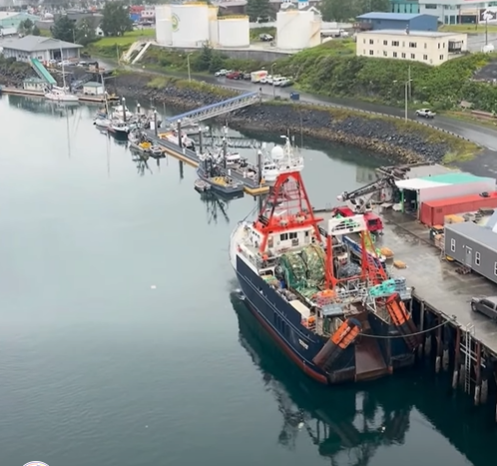
Killer Whale Ecotype Study (KWEST) kicks off
July 27, 2026
Research scientists from the University of Washington and NOAA recently departed from Kodiak, AK aboard the R/V Aquila for a 2-month research cruise focused on distinct groups of killer whales, or ecotypes, that hunt different prey and travel in different parts of the Gulf of Alaska.
Kauai' Field Work Updates
February 16, 2024
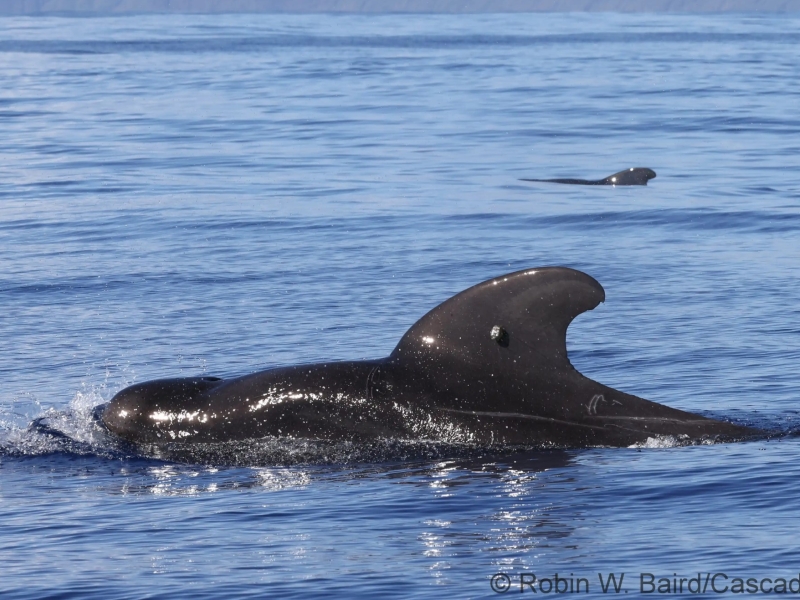
Scientists from Cascadia Research Collective are leading a ~9-day field project off Kaua’i that started on February 11th.